BPC-157 Reconstitution Calculator
Use our free BPC-157 reconstitution calculator to determine concentration per unit after mixing with bacteriostatic water. Enter your vial size and water volume.
Use this calculator to determine the concentration of your reconstituted BPC-157 solution. Enter your vial size and the volume of bacteriostatic water you add. The calculator shows the resulting concentration per unit volume.
BPC-157 Reconstitution Calculator
How to Use This Calculator
Three inputs, one output. The math is straightforward but easy to get wrong without a tool.
Step 1 - Enter Your Vial Size
Select or type the total peptide content of your vial in micrograms or milligrams. Common BPC-157 vial sizes are 5mg (5000mcg) and 10mg (10000mcg). PeptideGod sells a 5mg vial. Real Peptides sells a 10mg vial. The number on the vial label is what you enter.
Step 2 - Enter Water Volume
Type the amount of bacteriostatic water you plan to add, in milliliters. Common volumes are 1ml and 2ml. Using more water creates a more dilute solution with smaller amounts per unit volume. Using less water creates a more concentrated solution. There is no single "correct" volume. The choice depends on how precisely you want to measure.
Step 3 - Read Your Concentration
The calculator divides the total peptide content by the water volume to give you the concentration. This tells you how many micrograms of BPC-157 are in each 0.1ml (10 units on a standard insulin syringe). Write this number on the vial with a marker so you do not have to recalculate.
Reconstitution Basics
Reconstitution is the process of dissolving lyophilized (freeze-dried) peptide powder into a liquid solution.
What Is Reconstitution?
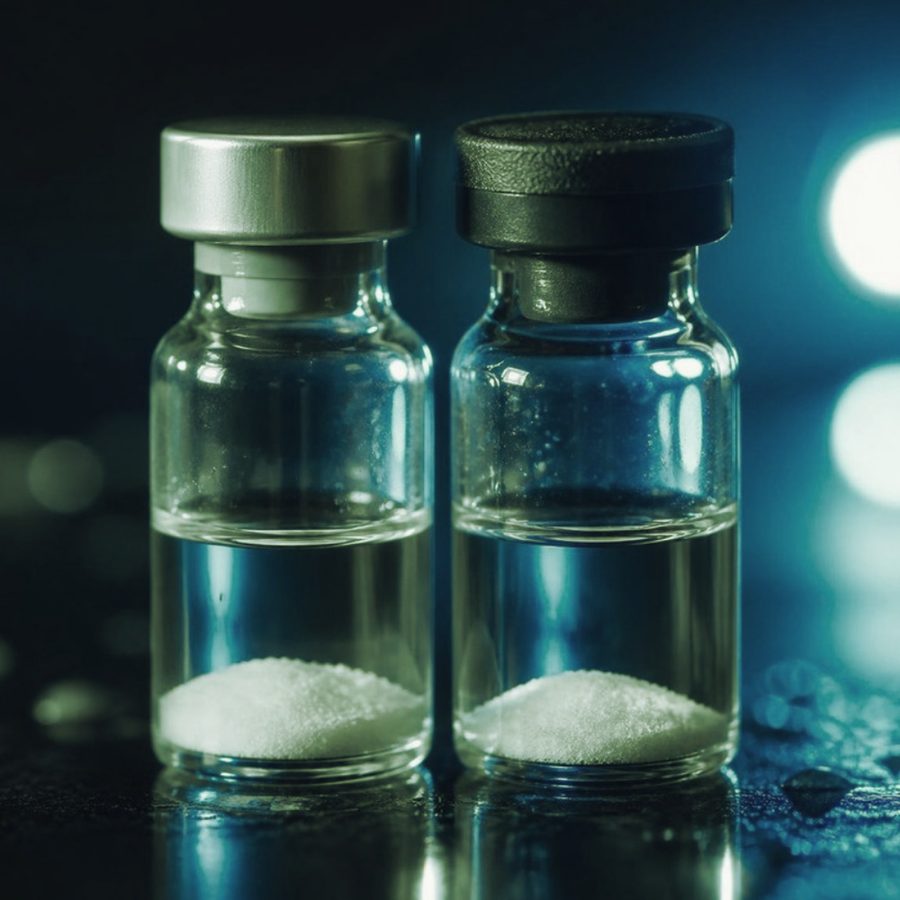
BPC-157 ships as a dry powder in a sealed glass vial. To use it, you add bacteriostatic water through the rubber stopper using a syringe. The water dissolves the powder into a clear solution. The concentration of that solution depends on how much water you add.
Why Bacteriostatic Water?
Bacteriostatic water contains 0.9% benzyl alcohol, which inhibits bacterial growth. This allows the reconstituted solution to remain safe to use for up to 28 days when refrigerated. Sterile water has no preservative and must be used within hours of reconstitution. For multi-use vials, bacteriostatic water is the standard choice. Real Peptides sells a 10ml vial for $4.80.
| Water Added | 5mg Vial (per 0.1ml) | 10mg Vial (per 0.1ml) |
|---|---|---|
| 1ml | 500mcg | 1000mcg |
| 2ml | 250mcg | 500mcg |
| 3ml | 167mcg | 333mcg |
Common Vial Sizes
- PeptideGod
- 5mg vial, $34.95 ($6.99/mg)
- Real Peptides
- 10mg vial, $43.20 ($4.32/mg)
- Bacteriostatic water
- 10ml vial, $4.80 (Real Peptides)
FAQ - Reconstitution
How much bacteriostatic water should I add?
The amount depends on your desired concentration. Adding 1ml to a 5mg vial gives 500mcg per 0.1ml. Adding 2ml gives 250mcg per 0.1ml. Choose a volume that makes measuring convenient for your purposes. Use the calculator above to test different volumes.
How long does reconstituted BPC-157 last?
When mixed with bacteriostatic water and refrigerated at 2 to 8 degrees C, reconstituted BPC-157 is generally considered stable for up to 28 days. After 28 days, the preservative effectiveness diminishes and bacterial contamination becomes a risk. Label the vial with the reconstitution date.
Can I use sterile water instead of bacteriostatic water?
Technically yes, but it is not recommended for multi-use vials. Sterile water has no preservative, so the solution must be used in a single session or discarded. Bacteriostatic water's benzyl alcohol preservative allows safe multi-use over 28 days. The $4.80 cost of a BAC water vial is worth the convenience and safety.
What syringe size should I use?
For reconstitution, a standard 3ml syringe with a blunt-tip needle works well for drawing and injecting water into the vial. For measuring from the reconstituted vial, a 1ml (100-unit) insulin syringe provides precise volume control. Each 0.1ml mark on the syringe equals 10 units.
Compare the current picks
Prices, sizes and ratings side by side, updated when the merchant pages change.
Shop online